



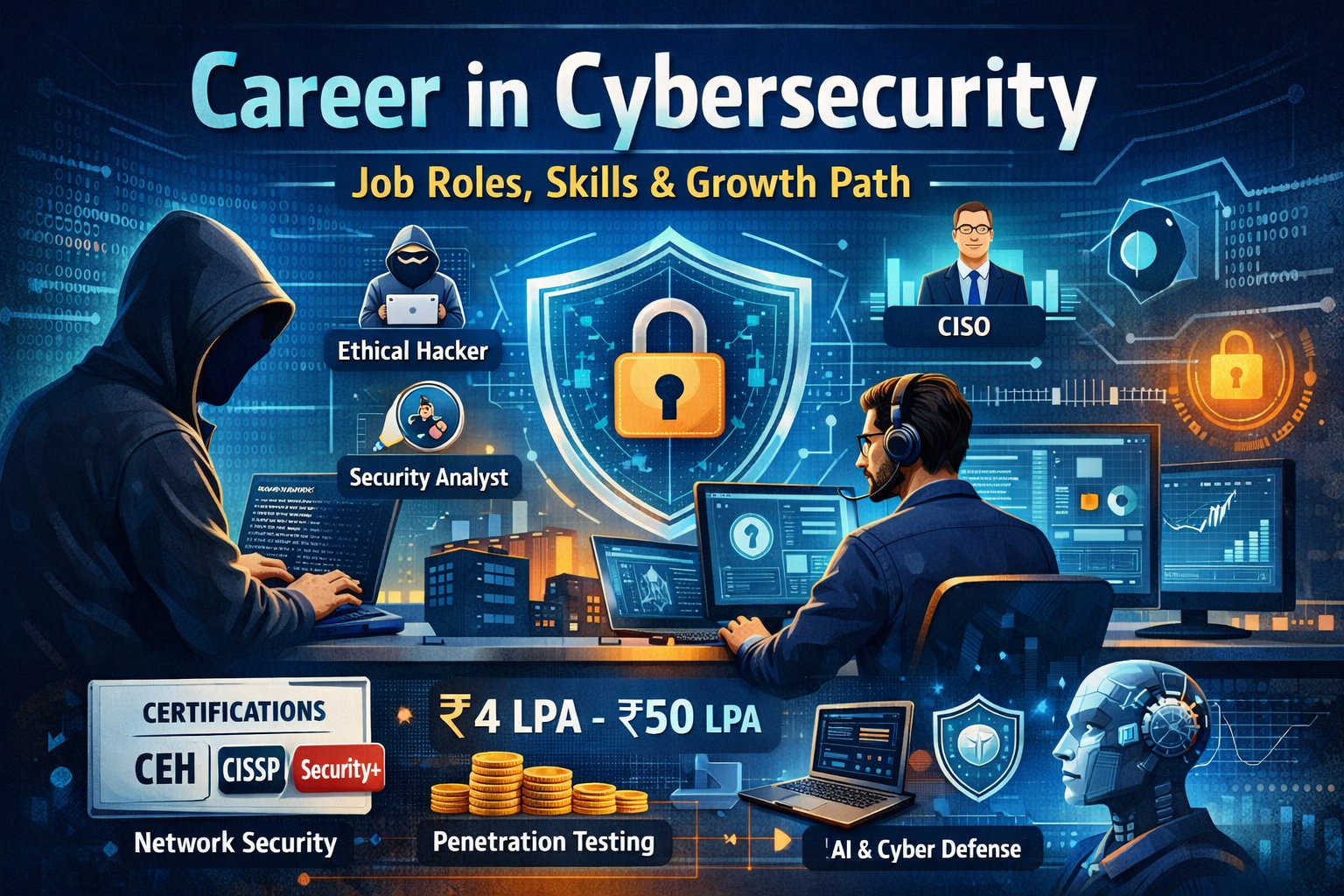
Cybersecurity has rapidly evolved into one of the most in-demand and future-proof career paths in the digital era. With increasing cyber threats, data breaches, and global digital transformation, organizations across industries are investing heavily in security professionals. Whether you’re a student, IT professional, or career switcher, a career in cybersecurity offers high salaries, job stability, and continuous growth opportunities.
In this comprehensive guide, we’ll explore key job roles, essential skills, and the growth path in cybersecurity.
What is Cybersecurity?
Cybersecurity refers to the practice of protecting systems, networks, and data from digital attacks. These attacks often aim to access, change, or destroy sensitive information, disrupt business operations, or extort money.
Cybersecurity includes multiple domains such as:
- Network Security
- Application Security
- Information Security
- Cloud Security
- Ethical Hacking
Why Choose a Career in Cybersecurity?
Choosing cybersecurity as a career comes with several advantages:
- High Demand: Millions of cybersecurity jobs remain unfilled globally
- Competitive Salaries: Attractive pay packages even at entry-level
- Job Security: Constant need due to rising cyber threats
- Diverse Opportunities: Roles across industries like finance, healthcare, government, and tech
- Continuous Learning: Ever-evolving field keeps professionals engaged
Also Read: Master’s in Data Science: Skills & Career Opportunities
Top Job Roles in Cybersecurity
Cybersecurity Analyst
- Monitors systems for security breaches
- Investigates incidents and responds to threats
- Entry-level friendly role
Ethical Hacker (Penetration Tester)
- Simulates cyberattacks to find vulnerabilities
- Helps organizations strengthen defenses
- Requires strong technical skills
Security Engineer
- Designs and implements secure systems
- Develops firewalls, encryption, and intrusion detection systems
Security Architect
- Plans and builds the overall security infrastructure
- Senior-level role requiring experience
Incident Responder
- Handles real-time cyberattacks
- Performs damage control and recovery
Cybersecurity Consultant
- Advises organizations on improving security
- Works independently or with consulting firms
Chief Information Security Officer (CISO)
- Top-level executive responsible for security strategy
- Requires years of experience
Essential Skills for Cybersecurity Professionals
Technical Skills
- Networking fundamentals (TCP/IP, DNS)
- Operating systems (Linux, Windows)
- Programming (Python, Java, C++)
- Cryptography basics
- Security tools (Wireshark, Metasploit, Nmap)
Analytical Skills
- Problem-solving ability
- Risk assessment
- Threat analysis
Soft Skills
- Communication
- Attention to detail
- Critical thinking
- Team collaboration
Educational Requirements
You don’t always need a specific degree, but having one helps:
- Bachelor’s in Computer Science, IT, or Cybersecurity
- Certifications (highly valued):
- CEH (Certified Ethical Hacker)
- CompTIA Security+
- CISSP (Certified Information Systems Security Professional)
Certifications That Boost Your Career
Certifications validate your skills and increase job opportunities:
- Beginner Level: CompTIA Security+, Network+
- Intermediate Level: CEH, SSCP
- Advanced Level: CISSP, CISM
These certifications improve credibility and salary potential.
Career Path in Cybersecurity
A typical cybersecurity career progression looks like this:
Step 1: Entry-Level
- IT Support
- Network Administrator
- Security Analyst
Step 2: Mid-Level
- Security Engineer
- Ethical Hacker
- Incident Responder
Step 3: Advanced Level
- Security Architect
- Cybersecurity Consultant
Step 4: Leadership Roles
- Security Manager
- CISO
Salary Expectations in Cybersecurity
Cybersecurity professionals are among the highest-paid in the tech industry.
- Entry-Level: ₹4–8 LPA
- Mid-Level: ₹8–20 LPA
- Senior-Level: ₹20–50+ LPA
Salaries vary based on skills, certifications, and experience.
Industries Hiring Cybersecurity Professionals
Cybersecurity is needed everywhere:
- Banking & Finance
- Healthcare
- Government & Defense
- E-commerce
- IT & Software Companies
Almost every organization today requires cybersecurity experts.
Tools Used in Cybersecurity
Professionals use a variety of tools:
- Network Tools: Wireshark, Nmap
- Pen Testing Tools: Metasploit, Burp Suite
- Security Monitoring: Splunk, SIEM tools
- Password Cracking: John the Ripper
Challenges in Cybersecurity Careers
While rewarding, cybersecurity also has challenges:
- Constant learning required
- High responsibility and pressure
- Handling real-time cyber threats
- Keeping up with evolving technologies
Future Scope of Cybersecurity
The future of cybersecurity is extremely promising:
- Increasing cybercrime rates
- Growth in cloud computing and IoT
- Demand for AI-based security solutions
- Global shortage of skilled professionals
Cybersecurity will remain a critical field for decades.
How to Start a Career in Cybersecurity
Follow these steps:
- Learn basic IT and networking
- Gain knowledge of operating systems
- Start learning cybersecurity fundamentals
- Get beginner certifications
- Practice using labs and tools
- Apply for internships or entry-level jobs
Importance of Practical Experience
Hands-on experience is crucial:
- Participate in Capture The Flag (CTF) competitions
- Use platforms like TryHackMe, Hack The Box
- Work on real-world projects
Practical exposure builds confidence and expertise.
Cybersecurity vs Other IT Careers
Cybersecurity stands out because:
- Focus on defense and protection
- Requires continuous vigilance
- More strategic and analytical than regular IT roles
Remote Work Opportunities
Cybersecurity offers excellent remote work options:
- Remote security analyst roles
- Freelance penetration testing
- Consulting opportunities
Freelancing in Cybersecurity
Freelancing is a growing option:
- Bug bounty programs
- Security consulting
- Vulnerability assessment
Platforms like HackerOne provide opportunities to earn rewards.
Role of AI in Cybersecurity
Artificial Intelligence is transforming cybersecurity:
- Automated threat detection
- Predictive analysis
- Faster incident response
AI will play a major role in future security systems.
Tips to Succeed in Cybersecurity
- Stay updated with latest threats
- Join cybersecurity communities
- Build a strong network
- Keep learning new tools and technologies
- Earn relevant certifications
Conclusion
A career in cybersecurity is one of the smartest choices in today’s digital world. With increasing cyber threats and technological advancements, the demand for skilled professionals continues to rise. From entry-level roles to leadership positions, cybersecurity offers a clear growth path, high earning potential, and job security.
If you’re passionate about technology and problem-solving, cybersecurity can be a highly rewarding and future-proof career.
More Read: Career Opportunities After a PhD in AI and Machine Learning
FAQs
Q1. Is cybersecurity a good career in 2026?
Yes, cybersecurity is one of the fastest-growing and most secure career options globally.
Q2. Can I start cybersecurity without coding?
Yes, basic roles don’t require coding, but learning programming helps in advanced roles.
Q3. How long does it take to become a cybersecurity professional?
It can take 6 months to 2 years depending on your learning path and dedication.
Q4. Which certification is best for beginners?
CompTIA Security+ is one of the best beginner-friendly certifications.
Q5. Is cybersecurity stressful?
It can be challenging, especially during attacks, but it is also highly rewarding.