



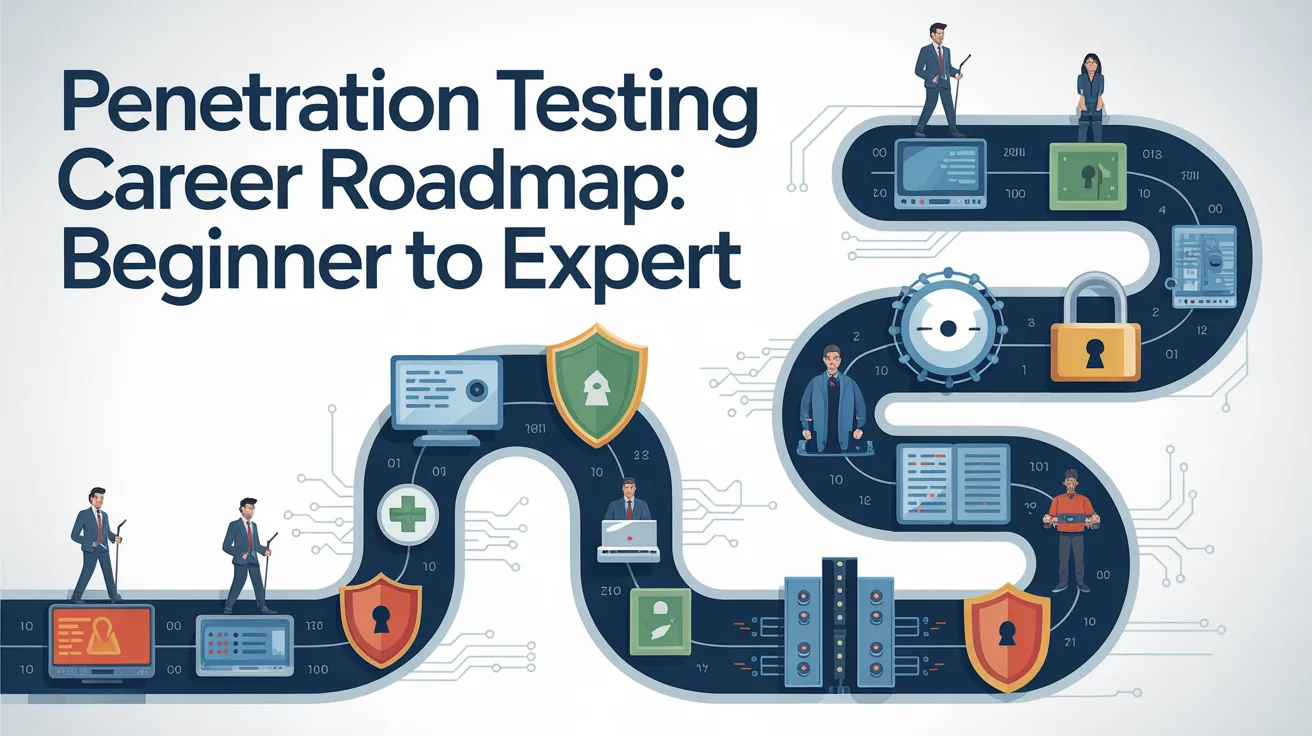
Penetration testing has become one of the most in-demand careers in cybersecurity. With organizations facing constant cyber threats, ethical hackers—also known as penetration testers—play a critical role in identifying vulnerabilities before attackers can exploit them. If you are curious about how to become a penetration tester, this guide will walk you through the fundamentals, skills, and early steps required to enter this exciting profession.
Whether you are a student, IT professional, or self-learner, this article explains how to become a pen tester from scratch and lays the foundation for your journey toward becoming a skilled pentester.
Introduction to Penetration Testing as a Career
Penetration testing is a specialized cybersecurity role focused on simulating real-world cyberattacks to evaluate the security of systems, networks, and applications. Professionals in this field are often referred to as ethical hackers because they use the same techniques as malicious hackers—but with permission and for defensive purposes.
A career in penetration testing is ideal for individuals who enjoy problem-solving, continuous learning, and hands-on technical challenges. As cyber threats continue to grow, companies across industries—finance, healthcare, government, startups, and multinational enterprises—are actively hiring skilled pentesters.
If you are researching how to become pentester, it’s important to understand that this career is not about shortcuts. It requires a strong technical foundation, ethical mindset, and consistent practice. However, the rewards—high salaries, job security, and global demand—make the effort worthwhile.
What Is Penetration Testing? Roles & Responsibilities
Before learning how to become a penetration tester, you must clearly understand what the job involves.
What Is Penetration Testing?
Penetration testing is the authorized process of testing computer systems, networks, web applications, and mobile apps to identify security weaknesses. The goal is to exploit vulnerabilities safely and report them so organizations can fix issues before real attackers find them.
Penetration testing can include:
- Network penetration testing
- Web application penetration testing
- Mobile application testing
- Cloud security testing
- Wireless network testing
Roles and Responsibilities of a Penetration Tester
A professional penetration tester is responsible for:
- Identifying security vulnerabilities in systems and applications
- Performing ethical hacking using manual and automated techniques
- Simulating real-world attack scenarios
- Writing detailed penetration testing reports
- Recommending remediation steps to improve security
- Staying updated with the latest hacking tools and attack vectors
Understanding these responsibilities helps clarify how to become a pen tester and what skills you must develop early in your career.
Why Choose a Career in Penetration Testing?
Many people ask, “Is penetration testing a good career?” The short answer is yes—and here’s why.
High Demand and Job Security
Cybercrime is increasing year after year. Organizations need professionals who can proactively defend their systems. This makes penetration testing one of the most future-proof cybersecurity roles.
Attractive Salary Packages
Penetration testers are among the highest-paid cybersecurity professionals. Even entry-level roles offer competitive salaries, while experienced pentesters and red team specialists earn premium compensation.
Continuous Learning and Growth
If you enjoy learning new technologies, tools, and techniques, penetration testing is an excellent fit. No two assessments are the same, making the job intellectually stimulating.
Global Career Opportunities
Penetration testing skills are globally recognized. Learning how to become pentester opens doors to remote jobs, freelance opportunities, and international roles.
Skills Required to Become a Penetration Tester
To master how to become a penetration tester, you must focus on building a combination of technical and non-technical skills.
Technical Skills
Some essential technical skills include:
- Networking fundamentals (TCP/IP, DNS, HTTP/HTTPS)
- Linux and Windows operating systems
- Web technologies (HTML, JavaScript, APIs)
- Basic scripting and programming
- Vulnerability assessment techniques
- Knowledge of common attack types (SQL injection, XSS, CSRF)
These skills form the backbone of learning how to become a pen tester effectively.
Non-Technical Skills
Penetration testers also need:
- Analytical thinking
- Attention to detail
- Strong documentation and reporting skills
- Ethical responsibility and professionalism
- Communication skills to explain technical risks to non-technical stakeholders
A successful pentester is not just a hacker but also a security consultant.
Beginner Level: Foundational Knowledge & Prerequisites
If you are starting from zero and wondering how to become a penetration tester, the beginner stage is crucial. This phase focuses on building strong fundamentals rather than jumping straight into hacking tools.
Educational Background
A formal degree is not mandatory, but having a background in:
- Computer science
- Information technology
- Cybersecurity
can be helpful. Many successful professionals, however, become pentesters through self-learning and certifications.
Understanding Core IT Concepts
At the beginner level, you should focus on:
- How computers work
- How data moves across networks
- How operating systems manage processes and memory
Skipping these basics often leads to confusion later. Anyone serious about how to become pentester should treat fundamentals as non-negotiable.
Networking, Linux & Programming Basics for Pentesters
This stage is where your journey toward how to become a penetration tester becomes more technical.
Networking Fundamentals
You must understand:
- IP addressing and subnetting
- TCP vs UDP
- Common ports and services
- Firewalls and routers
Most cyberattacks exploit network misconfigurations, making networking knowledge essential if you want to learn how to become a pen tester properly.
Linux Skills
Linux is the primary operating system used by penetration testers. You should learn:
- Command-line basics
- File and permission management
- Package installation
- Process and service handling
Familiarity with Linux distributions helps you work efficiently with penetration testing tools.
Programming and Scripting
You don’t need to be a software engineer, but basic knowledge of:
- Python
- Bash scripting
- JavaScript
will significantly improve your effectiveness. Programming allows you to understand exploits, automate tasks, and customize tools—key steps in how to become pentester at a professional level.
Ethical Hacking Mindset & Legal Awareness
One of the most overlooked aspects of how to become a penetration tester is understanding ethics and legality.
Ethical Hacking Principles
Penetration testers must:
- Work only with written authorization
- Respect scope limitations
- Protect client data
- Report vulnerabilities responsibly
Without ethics, hacking skills can quickly become illegal.
Legal Awareness
Laws related to cybersecurity vary by country, but unauthorized access to systems is illegal everywhere. Aspiring pentesters must learn:
- What activities are allowed in labs vs real environments
- Why permission is mandatory
- How professional penetration testing engagements work
This mindset separates ethical hackers from cybercriminals and is critical when learning how to become a pen tester the right way.
Tools Every Penetration Tester Must Learn
Once you understand the fundamentals, the next step in how to become a penetration tester is mastering industry-standard tools. Tools don’t replace skills—but they significantly improve efficiency and accuracy.
Essential Penetration Testing Tools
Some widely used tools include:
- Nmap – Network scanning and service discovery
- Burp Suite – Web application testing and interception
- Metasploit Framework – Exploit development and testing
- Wireshark – Network traffic analysis
- SQLmap – Automated SQL injection testing
- Nikto – Web server vulnerability scanning
Learning these tools helps beginners understand real attack surfaces. If you are serious about how to become a pen tester, focus on why a tool works—not just how to click buttons.
Intermediate Level: Vulnerability Assessment & Exploitation
At the intermediate stage, your journey toward how to become pentester moves from learning concepts to exploiting real vulnerabilities.
Vulnerability Assessment
This involves:
- Identifying weaknesses in systems and applications
- Prioritizing risks based on severity
- Understanding CVEs and CVSS scores
Vulnerability assessment is often the first step before full penetration testing.
Exploitation Skills
You should learn:
- Manual exploitation techniques
- Web attacks (XSS, SQL Injection, File Inclusion)
- Authentication bypass methods
- Privilege escalation basics
This stage builds confidence and prepares you for advanced pentesting roles.
Certifications Roadmap for Penetration Testing Career
Certifications play a major role in validating your skills and answering the question: how to become a penetration tester professionally.
Beginner Certifications
- CEH (Certified Ethical Hacker – foundational exposure)
- eJPT (Entry-Level Junior Penetration Tester)
Intermediate Certifications
- PNPT
- OSCP (Offensive Security Certified Professional)
Advanced Certifications
- OSCE / OSEP
- CRTO (Red Team Operations)
Certifications are not mandatory, but they significantly improve job prospects—especially if you are learning how to become a pen tester without a formal degree.
Hands-On Practice: Labs, CTFs & Bug Bounty
Practical experience is the backbone of how to become pentester.
Practice Labs
Hands-on platforms allow you to test skills safely:
- Virtual labs
- Simulated enterprise networks
- Web application practice environments
Capture The Flag (CTFs)
CTFs improve:
- Problem-solving skills
- Time management
- Exploitation creativity
Bug Bounty Programs
Bug bounty programs allow you to:
- Find real vulnerabilities
- Earn money
- Build credibility
Nothing proves your capability better than real-world results.
Building a Strong Penetration Testing Portfolio
If you’re wondering how to become a penetration tester without experience, a portfolio is the answer.
What to Include in a Portfolio
- Write-ups of labs and CTF challenges
- Bug bounty findings (responsibly disclosed)
- Custom scripts or tools
- GitHub repositories
- Blogs explaining vulnerabilities
A well-documented portfolio demonstrates practical skill—often more valuable than certificates alone.
Career Paths & Job Roles in Penetration Testing
Understanding career options helps clarify how to become pentester long-term.
Common Job Roles
- Junior Penetration Tester
- Web Application Pentester
- Network Security Tester
- Red Team Operator
- Security Consultant
With experience, professionals move into leadership, research, or specialized red team roles.
Salary, Growth & Future Scope of Penetration Testing
Salary Expectations
- Entry-level pentesters: Competitive starting packages
- Mid-level professionals: Significant salary growth
- Senior pentesters/red team leads: Premium compensation
Future Scope
With AI, cloud computing, and IoT expansion, penetration testing demand continues to grow. Learning how to become a penetration tester today ensures relevance for years to come.
Final Tips to Become an Expert Penetration Tester
To truly master how to become a pen tester, keep these tips in mind:
- Build strong fundamentals before advanced hacking
- Practice daily—consistency matters
- Focus on manual testing, not only tools
- Learn from write-ups and real-world case studies
- Stay ethical and legally compliant
- Network with cybersecurity professionals
Penetration testing is not a sprint—it’s a long-term skill journey. Those who persist become experts.
Conclusion:
Learning how to become a penetration tester requires discipline, curiosity, and hands-on practice. From understanding fundamentals to mastering tools, certifications, and real-world testing, every stage builds upon the previous one.
If you stay consistent and ethical, the path from beginner to expert pentester is achievable—regardless of your background.
Frequently Asked Questions
Becoming a penetration tester typically takes 1 to 3 years, depending on your background, learning consistency, and hands-on practice. Beginners with no IT experience may take longer, while IT professionals can transition faster.
No, a degree is not mandatory to learn how to become a penetration tester. Many successful pentesters are self-taught and rely on certifications, labs, CTFs, and real-world practice to prove their skills.
To become a pen tester, you need strong fundamentals in networking, Linux, web technologies, scripting, vulnerability assessment, and ethical hacking, along with analytical thinking and reporting skills.
For beginners learning how to become pentester, certifications like eJPT or CEH are commonly recommended. They help build foundational knowledge and improve job opportunities.
Yes, penetration testing remains a high-demand and future-proof career. With growing cyber threats, cloud adoption, and AI-driven attacks, skilled penetration testers will continue to be in strong demand.